Physics Sensei questions & answers
I Don’t Know Where to Start on Physics Problems. What Do I Do?
You read the problem once. Then again. You understand the words, but you have no idea what to do first. The page stays blank, and the clock keeps running.
It’s one of the worst feelings in physics. And it happens even when you know the material.
If you don’t know where to start on physics problems, here’s the secret: you don’t need to know the whole way before you start. You just need the first three moves.
What’s really going on
Most students wait to start until they can see the whole solution in their head. If they can’t see it, they freeze.
But that’s not how people who are good at physics work. They don’t see the whole path at first either. They start with small moves that don’t require knowing the answer: drawing the situation, writing what they know, naming the big idea. Those moves are what reveal the path.
In other words, the path doesn’t show up so you can start. It shows up because you started.
Why staring makes it worse
Staring at a blank page feels like thinking. But your brain needs something to work with, and the problem in words isn’t enough. The longer you stare, the more stressed you get, and the harder it is to think at all.
Even a rough sketch gives your brain something to grab.
Why it’s hard to change
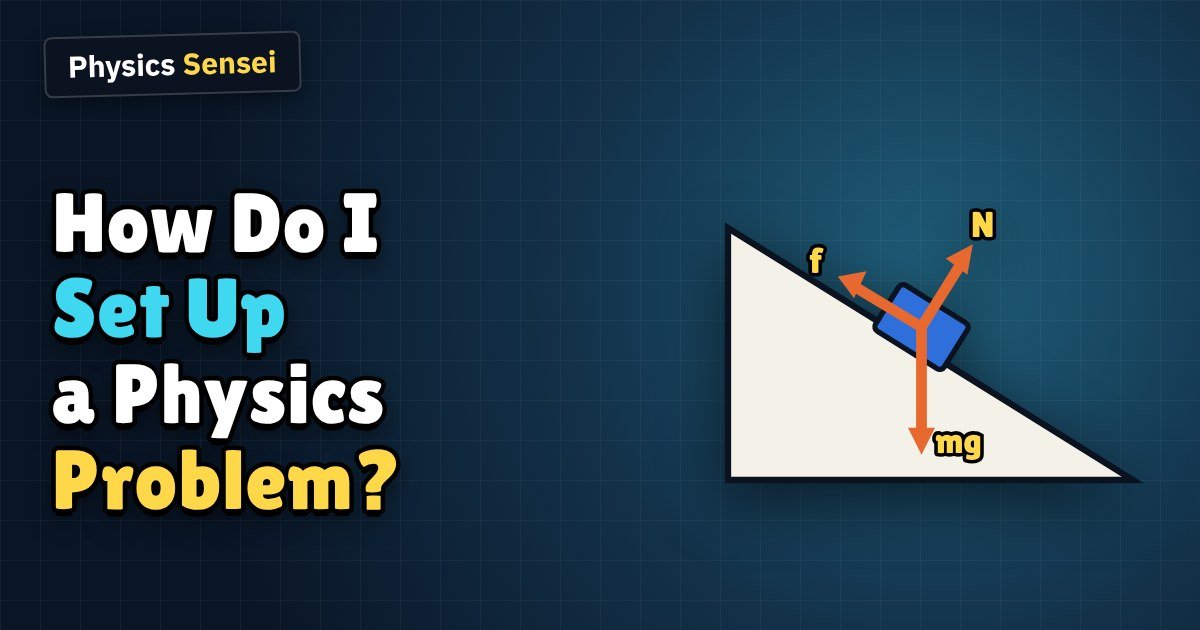
Drawing a picture or writing a list can feel like stalling, like busywork instead of solving. Some students even feel silly drawing a box on a ramp.
But those moves aren’t busywork. They’re the start of the solution. Your professor does them too. They just do them fast.
The fix: the first three moves
Every time you start a problem, do the same three moves, in the same order, before you think about equations.
Try this on every problem this week: the first three moves
- Draw it. Make a quick sketch of the situation: the objects, the motion, the arrows. Label what you can.
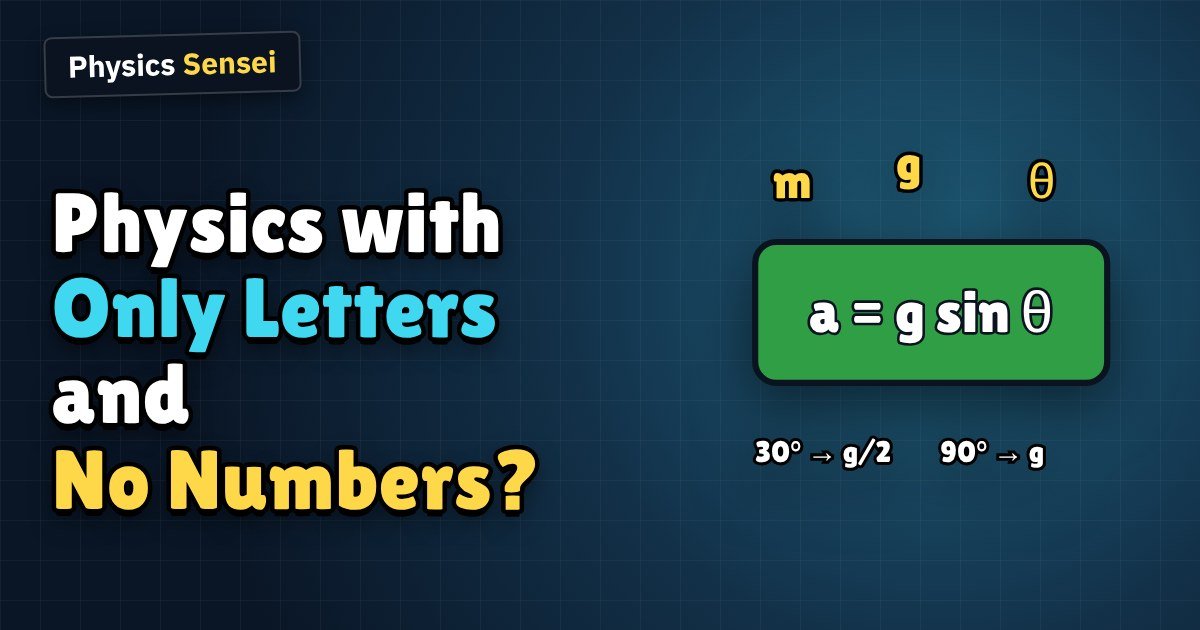
- List it. Ask: What are they asking? Write the unknown with a question mark. Then ask: What do I know? Write every given as a symbol with a number and unit.
- Name it. Ask: What’s the big idea? Forces, energy, momentum, or motion? Write your best guess, even if you’re not sure.
- Now look at your three moves together. Which equation connects what you know to what you want?
- Still stuck? Your sketch or list is probably missing something. Reread the problem and look for a hidden number, like “from rest.”
Three moves take about two minutes. And they almost always show you the next step.
What changes
At first, the moves feel slow and a little mechanical. That’s fine. Do them anyway.
After a week, they become automatic. You’ll sit down, sketch, list, name, and realize you’re already halfway through the problem. The blank page stops being blank.
You don’t need to see the whole path. You need the first three moves.
Practice problems built for this
On Physics Sensei, every problem is solved step by step, starting with the same moves: What are they asking? What do I know? What’s the big idea? Each one asks you to try it first, then gives you one more like it, with new numbers. It’s a quick way to make the first three moves a habit.
Your next step: on your next homework, do the first three moves before you look at any equation. Then try one problem on Physics Sensei the same way.
More questions about studying and grades? See them all here.
Raul, Physics Sensei