Physics Sensei questions & answers
How Do I Stop Just Plugging Numbers into Physics Formulas?
Find a formula with the right letters. Plug in the numbers. Hope the answer matches. That’s how a lot of physics homework gets done.
Sometimes it works. But when the answer is wrong, you have no idea why. And on the exam, when the problem looks a little different, you can’t even pick a formula.
If you’re tired of just plugging numbers into physics formulas, the fix isn’t more formulas. It’s one sentence you write before any math.
What’s really going on
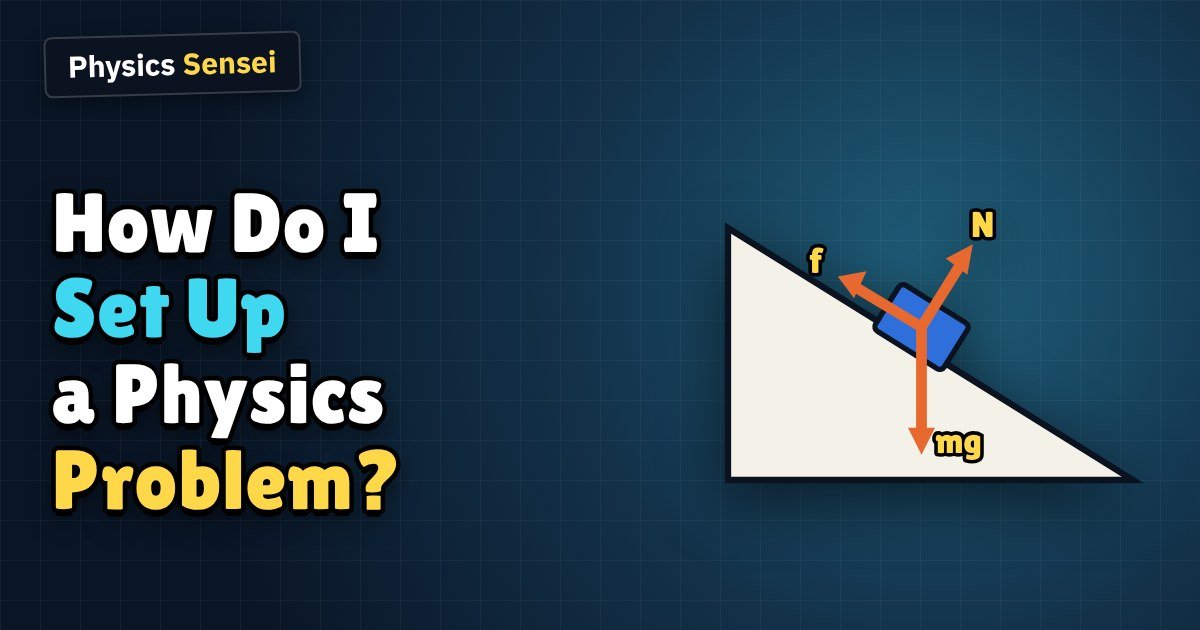
Plugging numbers skips the most important part of physics: understanding what’s happening. A formula is a summary of a story. A box speeds up because a force pushes it. A ball slows down because gravity pulls against its motion.
When you know the story, the right formula follows. When you skip the story, you’re matching letters, and the moment the letters look different, you’re lost.
Putting numbers in early causes a second problem. Once everything is numbers, you can’t see which quantity is which. Mistakes hide, and you can’t check whether the answer makes sense.
Why it gets worse
Plugging numbers works often enough on homework to feel like a real skill. Each success makes the habit stronger.
But the habit has no way to handle a new situation. So the more you rely on it, the more an unfamiliar exam problem feels impossible.
Why it’s hard to change
Writing a sentence before solving feels like a waste of time when you just want the answer. And working with symbols instead of numbers can feel harder at first.
But the sentence takes ten seconds. And it’s the part that lets you solve problems you’ve never seen.
The fix: story first, numbers last
Add one step before the math, and move the numbers to the end.
Try this on your next five problems: story first
- Write one sentence that tells the story of what’s happening, in plain words. Example: “The ball slows down as it rises because gravity pulls it down.”
- Ask: What’s the big idea? The story usually tells you. A push or pull that speeds something up is forces. Heights and speeds are energy. Collisions are momentum.
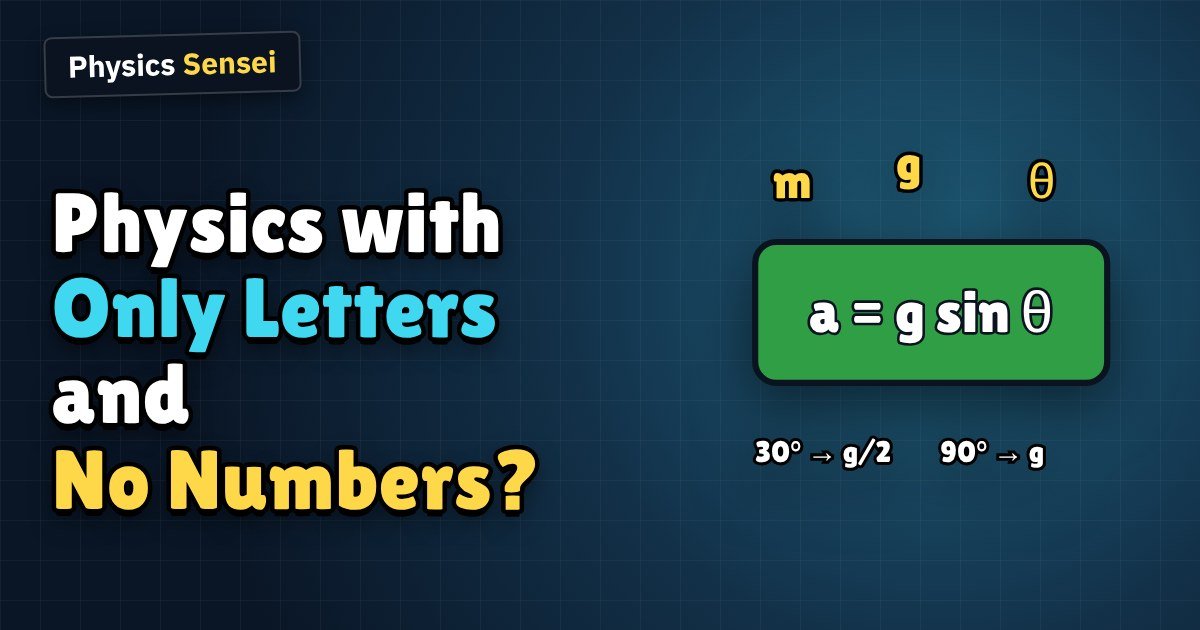
- Ask: What are they asking? What do I know? Write the equation and solve it in symbols first.
- Only now plug in the numbers, with their units.
- Ask: Does it make sense? Does the answer fit your story? A ball thrown faster should go higher.
The story is what you’ll remember on the exam, long after the formula sheet blurs.
What changes
After a week, the sentence comes quickly. And you’ll notice you’re picking the right formula without hunting for it, because the story already pointed to it.
When an answer comes out wrong, you’ll be able to find out why, because every step still says what it means.
Tell the story first. The formula follows.
Practice problems built for this
On Physics Sensei, every problem is solved step by step, and the third step, “What’s the big idea?”, is where the story turns into physics. Each one asks you to try it first, then gives you one more like it, with new numbers. You find out right away exactly where you slipped.
Your next step: on your next homework, write the one-sentence story before every problem. Then try one problem on Physics Sensei the same way.
More questions about studying and grades? See them all here.
Raul, Physics Sensei