Physics Sensei logo
Physics Sensei
Physics Help That Makes Sense
Home Students Instructors Institutions Physics Games Log In
Appearance
  • home
What Does a Battery Actually Do to Electric Charges?

What Does a Battery Actually Do to Electric Charges?

by Raul Barrea | Oct 22, 2026 | article, Electricity & Circuits

Foundational Physics Short Answer: A battery uses stored chemical energy to maintain a voltage between its terminals. When a conducting circuit is closed, this helps establish an electric field that drives charges already present in the circuit and transfers energy to...
Why Does a Light Bulb Turn On Almost Immediately if Electrons Drift Slowly?

Why Does a Light Bulb Turn On Almost Immediately if Electrons Drift Slowly?

by Raul Barrea | Oct 22, 2026 | article, Electricity & Circuits

Foundational Physics Short Answer: A light bulb turns on quickly because the electrical signal travels through the circuit much faster than individual electrons drift. Electrons are already present throughout the wire and bulb, so they can respond as the electric...
Why Does a Short Circuit Cause So Much Current?

Why Does a Short Circuit Cause So Much Current?

by Raul Barrea | Oct 22, 2026 | article, Electricity & Circuits

Foundational Physics Short Answer: A short circuit creates an unintended path with very low resistance, often bypassing the part of the circuit meant to limit current. With the same applied voltage, a smaller total resistance can allow a much larger current, which may...
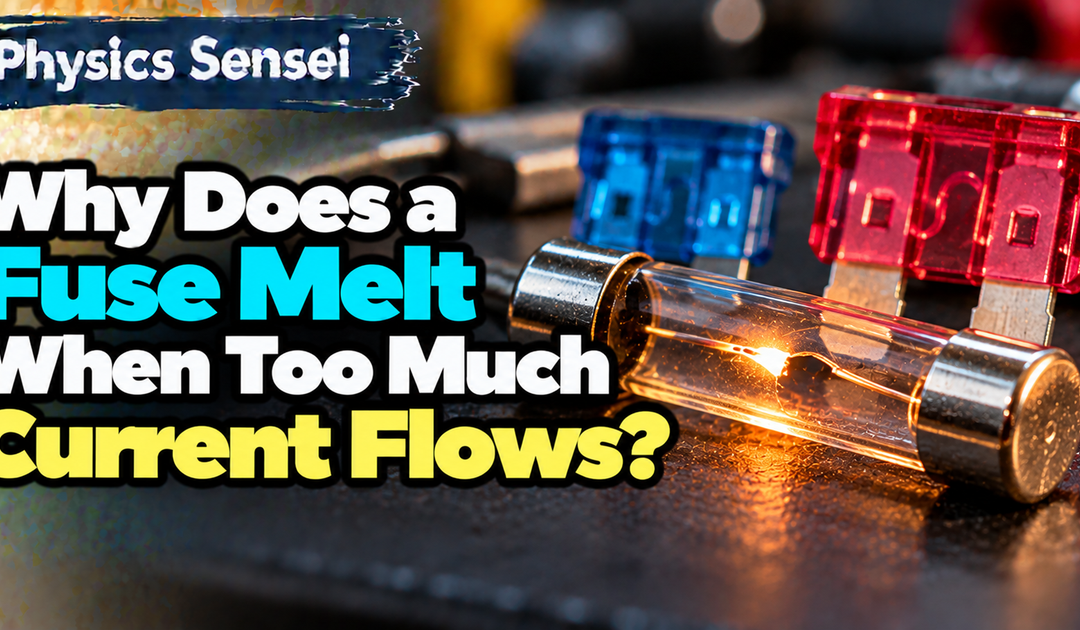
Why Does a Fuse Melt When Too Much Current Flows?

Why Does a Fuse Melt When Too Much Current Flows?

by Raul Barrea | Oct 22, 2026 | article, Electricity & Circuits

Foundational Physics Short Answer: A fuse contains a metal element that heats as current passes through it. If the current is high enough for long enough, resistive heating melts the element, opening the circuit and interrupting the current. This deliberate weak link...
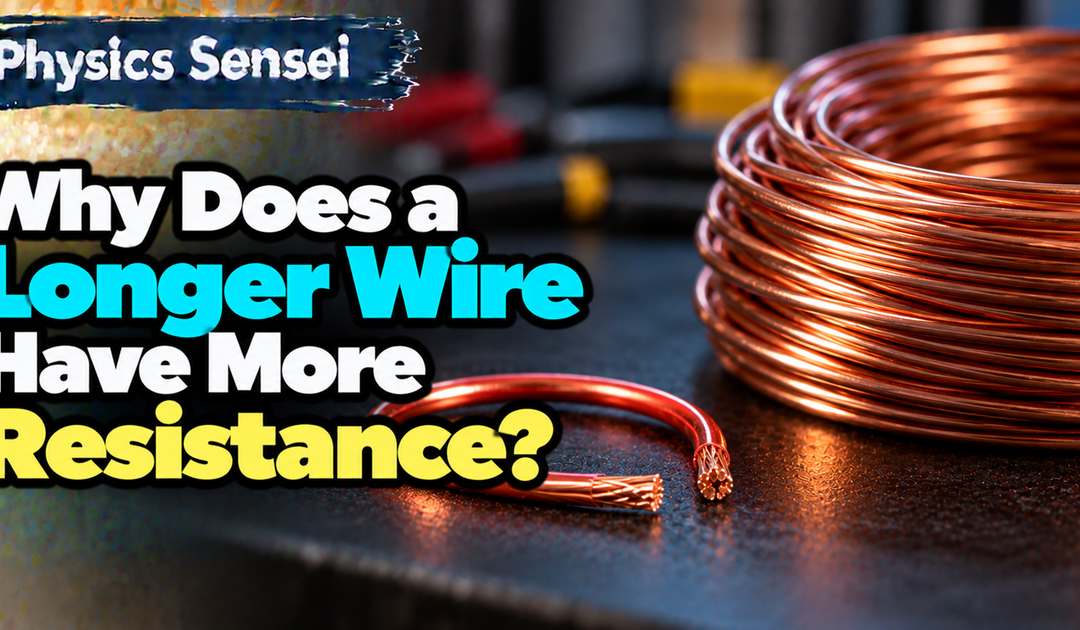
Why Does a Longer Wire Have More Electrical Resistance?

Why Does a Longer Wire Have More Electrical Resistance?

by Raul Barrea | Oct 22, 2026 | article, Electricity & Circuits

Foundational Physics Short Answer: A longer wire has more electrical resistance because charges move through a longer stretch of resistive material. For a uniform wire of the same material, thickness, and temperature, resistance is directly proportional to its length:...
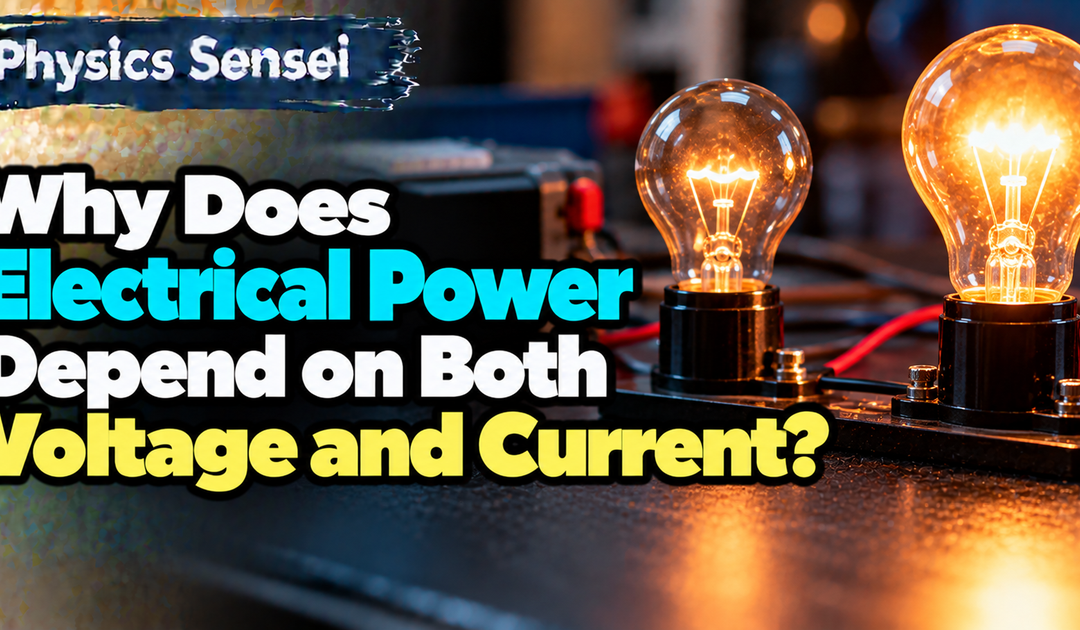
Why Does Electrical Power Depend on Both Voltage and Current?

Why Does Electrical Power Depend on Both Voltage and Current?

by Raul Barrea | Oct 22, 2026 | article, Electricity & Circuits

Foundational Physics Short Answer: Electrical power depends on both voltage and current because voltage tells us how much energy is transferred per coulomb of charge, while current tells us how many coulombs pass each second. Multiplying them gives the energy...
« Older Entries

Categories

  • Physics Sensei 5.2 (145)
    • article (117)
      • Electricity & Circuits (27)
      • Energy & Momentum (11)
      • Fluids (7)
      • Motion & Forces (26)
      • Rotation & Gravitation (22)
      • Studying & Grades (2)
      • Thermal Physics (22)
    • Games (3)
    • Institutions (1)
    • Instructors (1)
    • Legal (1)
    • Membership (9)
    • Solutions: Forces (1)
    • Students (10)

Recent Posts

  • Why Do My Friends Study Less and Get Better Grades Than Me?
  • Why Am I Studying So Hard but Still Getting Bad Grades?
  • What Does a Battery Actually Do to Electric Charges?
  • Why Does a Light Bulb Turn On Almost Immediately if Electrons Drift Slowly?
  • Why Does a Short Circuit Cause So Much Current?

Calendar

November 2026
M T W T F S S
 1
2345678
9101112131415
16171819202122
23242526272829
30  
« Oct    

Tags

physics help physics help for students physics solutions for institutions physics support for instructors

Copyright

2025-26 Physics Sensei 

Info

rbarrea@physicssensei.com

Follow

  • Follow
  • Follow

Created by Raul Barrea, PhD
College physics instructor for 30+ years • Black belt in karate • Creator of the Physics Sensei learning system

Meet the Sensei →

Disclaimer: PhysicsSensei.com provides guided physics help, teaching support, classroom activities, and supplemental learning resources. Results depend on individual effort, preparation, course expectations, and external circumstances.

Manage Consent

We use cookies and similar technologies to make Physics Sensei work properly, understand how the site is used, and support certain features. You can accept these technologies or manage your preferences. Your choices may affect how some features work.

Functional Always active
The technical storage or access is strictly necessary for the legitimate purpose of enabling the use of a specific service explicitly requested by the subscriber or user, or for the sole purpose of carrying out the transmission of a communication over an electronic communications network.
Preferences
The technical storage or access is necessary for the legitimate purpose of storing preferences that are not requested by the subscriber or user.
Statistics
The technical storage or access that is used exclusively for statistical purposes. The technical storage or access that is used exclusively for anonymous statistical purposes. Without a subpoena, voluntary compliance on the part of your Internet Service Provider, or additional records from a third party, information stored or retrieved for this purpose alone cannot usually be used to identify you.
Marketing
The technical storage or access is required to create user profiles to send advertising, or to track the user on a website or across several websites for similar marketing purposes.

  • Manage options
  • Manage services
  • Manage {vendor_count} vendors
  • Read more about these purposes
View preferences
  • {title}
  • {title}
  • {title}