

Foundational Physics
Short Answer: Astronauts feel weightless in orbit because they and their spacecraft are falling around Earth together. Gravity is still pulling on them and keeping them in orbit, but the station’s floor no longer has to support them as it does on the ground.
Sensei’s Warning
Weightless does not mean gravity-free. Gravity keeps the spacecraft in orbit. Astronauts mainly stop feeling the support force they normally feel when standing on the ground.
Why Do Astronauts Float If Earth Is Still Pulling Them?
Astronauts in orbit are not beyond Earth’s gravity. Earth pulls on them strongly enough to keep them moving around the planet instead of flying off in a straight line.
The surprising part is that the spacecraft is falling, too. The astronauts and the station fall around Earth together. Because both follow nearly the same free-fall motion, the floor does not have to hold the astronauts up the way a floor does on Earth.
They float because they are falling together—not because gravity has disappeared.
How Can Falling Turn Into an Orbit?
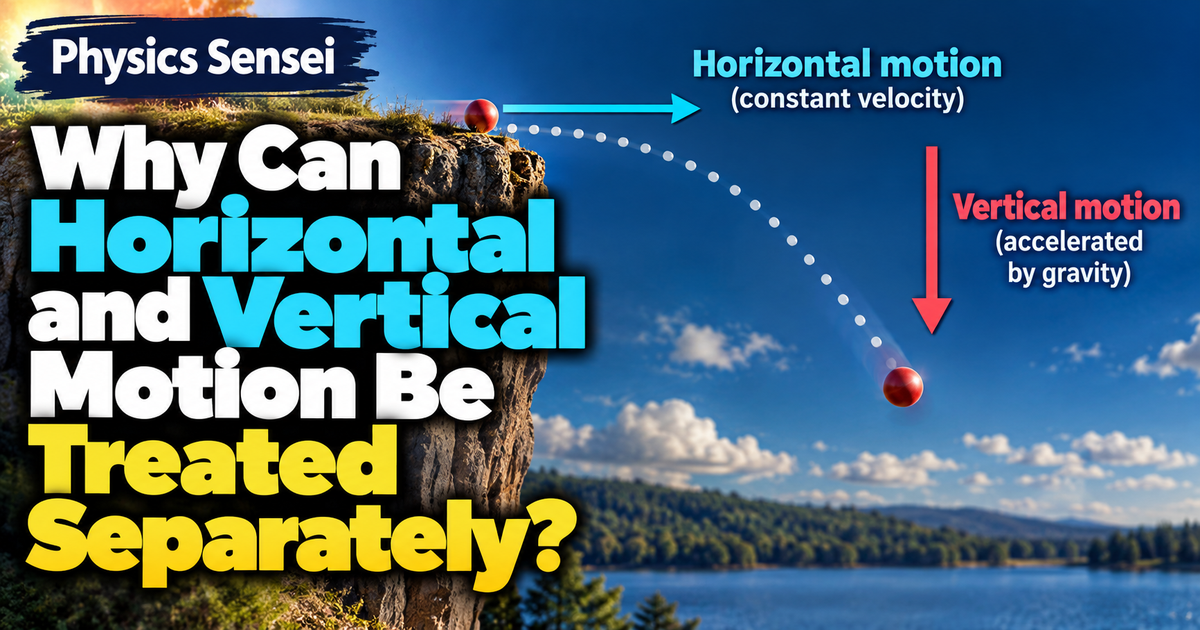
Imagine throwing a ball horizontally. Gravity pulls it downward while the ball continues forward. Throw it faster and it travels farther before reaching the ground.
An orbit is the extreme version of that idea. With enough sideways speed and almost no air resistance, a spacecraft keeps falling toward Earth while the curved surface of Earth falls away beneath it.
The spacecraft is not hovering. It is continuously changing direction under gravity.
What Makes Us Feel Weight on the Ground?
When you stand still, gravity pulls downward on you, but the floor pushes upward. That supporting contact force is what a bathroom scale measures, and it contributes to the familiar sensation of weight.
In an orbiting station, the astronaut and the surrounding cabin accelerate together under gravity. The floor does not need to supply the same supporting force. With almost no support force pressing against the astronaut, they experience apparent weightlessness.
An astronaut still has mass. Earth still exerts gravitational force on them. What changes is the contact force they feel.
Is It Really Zero Gravity Inside a Space Station?
No. The International Space Station orbits only a few hundred kilometers above Earth, where gravity is still substantial.
You may hear the term microgravity. Small differences in gravitational acceleration across the station, atmospheric drag, movement, and tiny vibrations can produce weak relative accelerations. The floating appearance is therefore not evidence that the gravitational field is zero.
The essential reason astronauts float is shared free fall.
Would the Same Thing Happen in a Falling Elevator?
In an ideal elevator falling freely with no air resistance, a person and the elevator would accelerate downward together. The floor would no longer need to support the person, so they would briefly feel weightless.
This is a useful comparison, not something to test. Real elevators have safety systems and other forces that make their motion different from an ideal free-fall model.
The Key Idea to Remember
Gravity causes orbital free fall. Apparent weightlessness happens because the astronaut and spacecraft fall together, so the usual support force nearly disappears.
Weightlessness is about what you feel—not about gravity switching off.
When This Breaks
The simple explanation assumes an orbiting spacecraft and astronaut in nearly the same free-fall motion. During rocket thrust, a collision with a surface, or other contact interactions, the astronaut may feel a significant force again. Small residual accelerations also mean an orbiting station is not a perfect zero-gravity laboratory.
Keep Exploring
Continue with the Gravitation Unit Review.
Choose the course that matches yours, then a review depth that fits your time.
Foundational Physics
Algebra-Based Physics
Calculus-Based Physics
Reviewed by Physics Sensei
Still stuck? Get unstuck. Choose the review that matches your course and the time you have.

0 Comments